The High-Protein Breakfast: The Single Most Effective Habit for Fat Loss
Why eating 30g+ of protein within an hour of waking up is one of the most well-documented levers for appetite control and sustainable fat loss.

Dr. Marcus Bennett, MS, RDN
April 23, 2026 · 6 min read
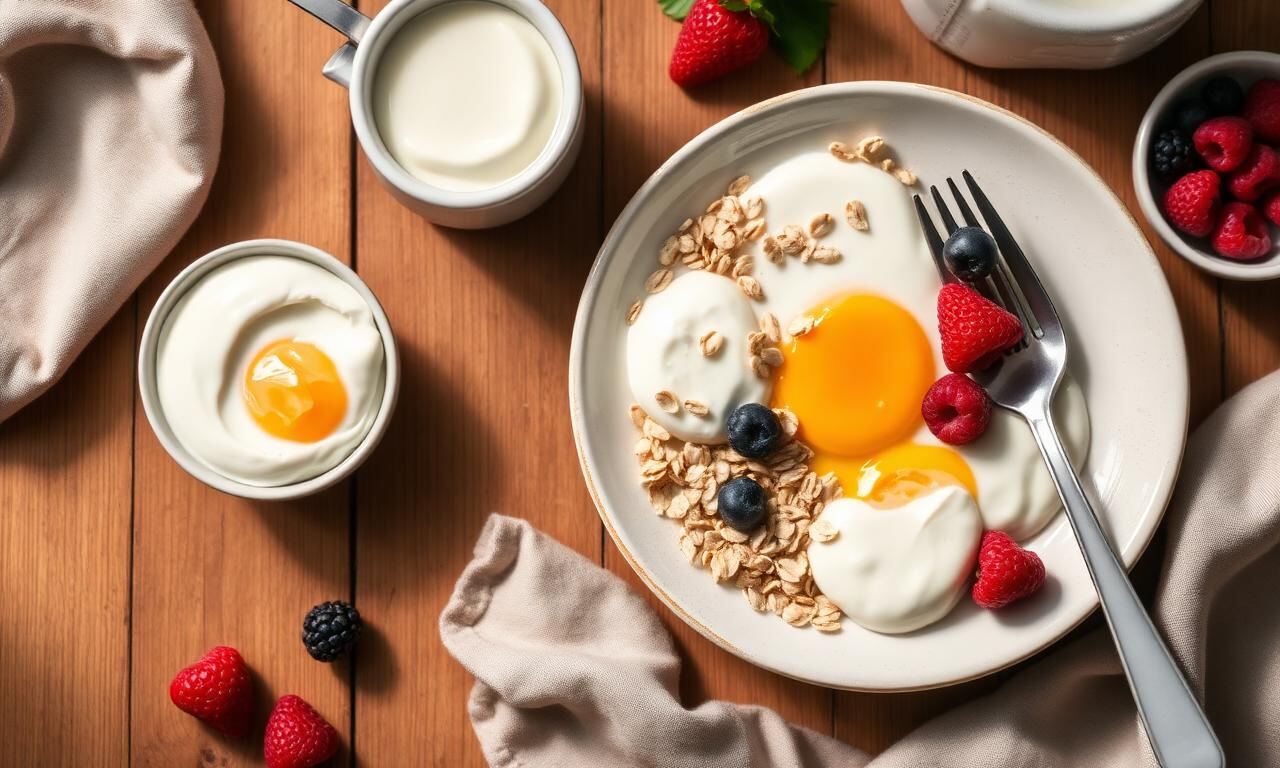
Plate of eggs, oats, berries and Greek yogurt on a wooden table
If you only changed one thing about your diet this year, the highest-leverage swap would be your breakfast. Specifically: replacing a carb-heavy morning meal with one built around at least 30 grams of protein. The research on this is unusually clear — and the effects compound across the entire day.
Why morning protein matters more than morning calories

Protein is the most satiating macronutrient. Per calorie, it produces a stronger and longer-lasting fullness signal than fat or carbohydrate. When you start the day with 30+ grams of protein, ghrelin (the hunger hormone) stays suppressed well past noon. The mid-morning snack craving disappears. Lunch is smaller without effort. By evening, you've often eaten 300–500 fewer calories than you would on a typical bagel-and-coffee start — without ever feeling deprived.
What the research actually shows

Multiple controlled studies — including work published in the American Journal of Clinical Nutrition — have shown that high-protein breakfasts reduce daily food intake, lower late-night snacking, and improve glucose stability throughout the day. One trial found that adolescents eating a 35g-protein breakfast had measurably fewer cravings and better appetite control than those eating cereal of equal calories.
What 30 grams looks like in real food
Three eggs plus a cup of Greek yogurt. Two eggs plus a small chicken sausage and cottage cheese. A protein smoothie with one scoop of whey, a cup of milk, and two tablespoons of peanut butter. A bowl of skyr with berries and a handful of nuts. None of these take longer than five minutes. None require expensive ingredients. The barrier is purely habit.
Why most breakfasts sabotage you
A typical Western breakfast — toast, cereal, pastries, fruit juice — is almost pure carbohydrate. It spikes blood sugar quickly, drops it just as fast, and leaves you hungry within 90 minutes. By 10 AM you're reaching for coffee or a snack. By lunch you're ravenous. The pattern repeats all day, and it's the single biggest driver of unintentional overeating in modern diets.
How to build the habit in 7 days

Day 1–3: just add a hard-boiled egg and a serving of Greek yogurt to whatever breakfast you currently eat. Don't remove anything yet. Day 4–7: replace the carb portion with a second protein source. By the end of the week, you'll naturally be at 30g+ and notice the appetite shift. The key is to never skip — consistency builds the hormonal adaptation.
“Why eating 30g+ of protein within an hour of waking up is one of the most well-documented levers for appetite control and sustainable fat loss.”
Pairing with the rest of your day

A high-protein breakfast sets the tone, but the effect is strongest when lunch and dinner also include 30–40g of protein. This keeps muscle protein synthesis active, preserves lean mass during a calorie deficit, and keeps cravings predictable. The total daily target most research supports for fat loss is 0.7–1.0 grams of protein per pound of target bodyweight.
The bottom line

You don't need to overhaul your diet. Change breakfast first, give it two weeks, and let the rest of the day adjust around it. It's the simplest, cheapest, and most evidence-backed change you can make — and it works for almost everyone.
Best Deals Today

Continue reading
April 23, 2026
Stubborn Belly Fat After 30: Why It Won't Budge (And What Actually Works)
Why belly fat becomes harder to lose after 30 — the metabolic, hormonal, and lifestyle drivers — and the evidence-based habits, foods, and supplements that genuinely move the needle.

April 25, 2026
Vision Decline After 40: What's Actually Happening to Your Eyes (And How to Slow It Down)
Why eyesight changes after 40 are biological — not just a nuisance — and the evidence-based nutrients, habits, and supplements that can meaningfully slow the process.

April 25, 2026
Digital Eye Strain: Why Your Eyes Hurt After Screen Time (And How to Actually Fix It)
A research-backed guide to the real causes of digital eye strain — and the screen habits, environmental tweaks, and nutrients that genuinely make a difference.

April 20, 2026
Natural Thermogenics: How Citrus-Based Fat Burners Actually Work
A clear, science-backed breakdown of how thermogenic ingredients like citrus extract, capsaicin and green tea support metabolism and accelerate fat loss.